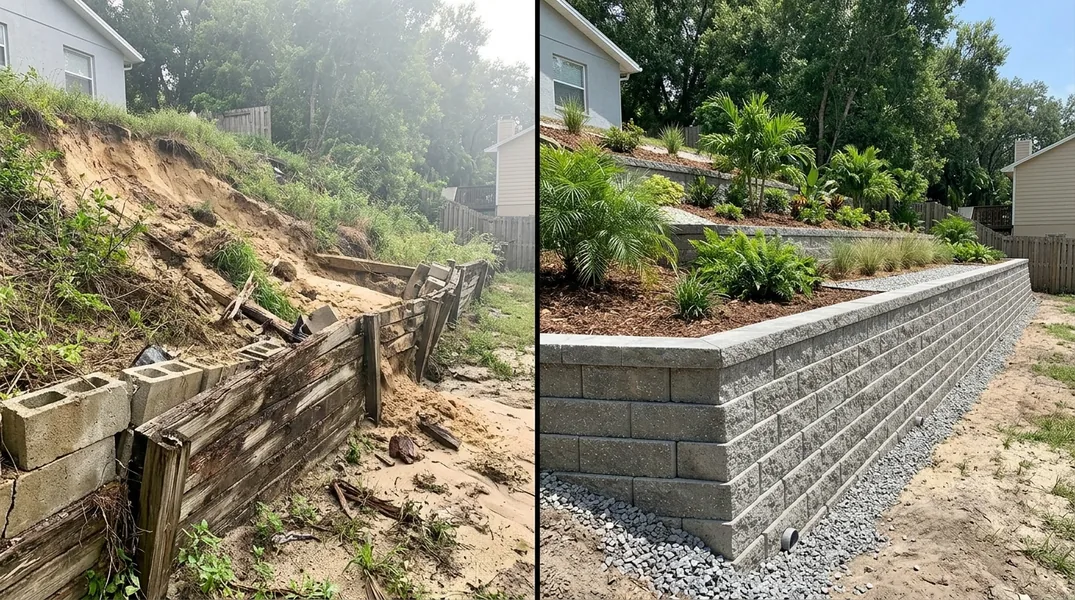
Why Tampa's Soil and Water Table Demand the Right Retaining Wall Material
If you live in Tampa, you already know that our sandy soil and high water table are a fact of life. But when it comes to building a retaining wall, those two factors are not just minor details. They are the difference between a wall that stands strong for decades and one that leans, cracks, or fails within a few years. Sandy soil drains quickly, which sounds good, but it also shifts easily and offers less lateral support than clay or loam. Meanwhile, a high water table means that during heavy summer rains, water pressure can build up behind your wall with nowhere to go. Choosing the wrong material in these conditions is a recipe for expensive repairs.
That is why local knowledge matters. A contractor who works in St. Petersburg or Clearwater will tell you the same thing: you need materials that resist moisture, handle shifting ground, and allow proper drainage. In this article, we will walk you through the best options for Tampa area homes, including Concrete Retaining Walls, block systems, boulder walls, and segmental retaining walls. We will also explain why professional Retaining Wall Installation is critical in these conditions and how to avoid common pitfalls.
Concrete Retaining Walls: Strength for Shifting Sands
When homeowners ask us about the most durable option for Tampa's environment, Concrete Retaining Walls are often at the top of the list. Poured concrete walls are extremely heavy and rigid, which helps them resist the lateral pressure caused by saturated sandy soil. They can be designed with reinforcement and proper footings to handle the high water table, and they offer a clean, modern look that works well with many Florida home styles. Because concrete is not affected by moisture in the way that wood or some masonry products are, it will not rot or degrade from constant exposure to damp soil. However, concrete walls require professional engineering and installation to ensure they can flex slightly without cracking. In a region where the ground can shift after heavy rains, a properly reinforced concrete wall is a smart long-term investment.
That said, concrete walls are not a DIY project. The footing must be deep enough and the wall must include proper drainage measures, such as weep holes and a gravel backfill, to relieve water pressure. If you are considering concrete for your property, it is worth getting a professional assessment. Our team at Tampa Retaining Wall can help you understand whether concrete is the right fit for your slope and soil conditions. We also offer Retaining Wall Repair for existing concrete walls that may have developed cracks or leaning due to water pressure.
Block and Segmental Retaining Walls: Flexibility and Curb Appeal
Block retaining walls and segmental retaining walls are among the most popular choices for Tampa homeowners, and for good reason. These systems are made from interlocking concrete blocks that are designed to flex slightly with ground movement, which is a major advantage in sandy soil that shifts during the rainy season. Segmental retaining walls are particularly well-suited to high water tables because they can be built with permeable backfill and drainage layers that allow water to pass through rather than build up behind the wall. They also come in a wide variety of colors, textures, and sizes, so you can achieve a natural stone look or a more modern appearance without sacrificing performance. Many block systems are engineered specifically for retaining walls and include geogrid reinforcement for added stability on taller walls.
One of the key benefits of block and segmental walls is that they are relatively easy to repair if a section is damaged. Unlike poured concrete, individual blocks can be removed and replaced without rebuilding the entire wall. This can save you significant money over time. However, proper installation is still essential. The base must be compacted correctly, and the drainage system must be designed to handle the water volume that comes with a high water table. If you are looking for a balance of durability, aesthetics, and long-term value, a block or segmental retaining wall is often the best choice for Tampa properties. To discuss options and get a pricing overview, reach out to our team.
Boulder Retaining Walls: Natural Look, Solid Performance
Boulder retaining walls are a favorite for homeowners who want a natural, rustic appearance that blends seamlessly with Florida landscaping. These walls are built from large, heavy stones that are stacked without mortar, relying on their own weight and careful placement to hold back the soil. In Tampa's sandy soil, boulder walls can be very effective because the individual stones are heavy enough to resist shifting, and the gaps between them allow water to drain freely. This natural drainage is a huge advantage in areas with a high water table, as it prevents the buildup of hydrostatic pressure that can cause walls to fail. Boulder walls are also extremely durable and require very little maintenance over time.
However, boulder walls do have some limitations. They are best suited for shorter walls, typically under four feet, and they require a skilled installer to ensure the stones are properly seated and interlocked. If the base is not prepared correctly, the wall can settle unevenly or shift over time. Additionally, because boulder walls are not reinforced with geogrid or concrete, they may not be suitable for very steep slopes or areas with extreme water pressure. For many Tampa homeowners, though, a well-built boulder wall is a beautiful and practical solution. If you are unsure whether a boulder wall is right for your property, our team can evaluate your site and recommend the best approach. We also handle Retaining Wall Replacement if your existing wall is beyond repair.
Retaining Wall Installation Near Me: When to Call a Pro in Tampa
If you are searching for "retaining wall installation near me" in the Tampa area, you are likely realizing that this is not a job for a weekend warrior. While the idea of building your own wall might be appealing, the combination of sandy soil and a high water table makes professional installation essential. A properly built wall requires a deep, compacted base, the right drainage materials, and an understanding of how water moves through your specific property. Without these elements, even the best materials will fail. Professional installers also have access to engineering guidance and can recommend the right wall type for your slope, soil, and water conditions. This is especially important if your wall will be taller than three or four feet, as taller walls require additional reinforcement and may be subject to local building codes.
Hiring a local expert also gives you peace of mind. At Tampa Retaining Wall, we specialize in designing and building walls that stand up to Tampa's unique environment. We understand the local soil, the seasonal water table fluctuations, and the best materials for each situation. Whether you need a small garden wall or a large structural wall, we can help you choose the right solution and install it correctly. If you would like to discuss your project, we invite you to contact us for a free estimate or call us at (656) 254-3746. We serve homeowners throughout Tampa and the surrounding communities, including Brandon, and we are happy to answer your questions and provide a detailed quote.
Looking for a professional retaining wall contractor in Tampa? Tampa Retaining Wall responds fast for all your retaining wall needs.
Get a Free QuoteOur services: Retaining Wall Installation · Retaining Wall Repair · Retaining Wall Replacement